
Login

Sign Up

After creating an account, you'll be able to track your payment status, track the confirmation and you can also rate the tour after you finished the tour.
Username*
Password*
Confirm Password*
First Name*
Last Name*
Birth Date*
Email*
Phone*
Country*
* Creating an account means you're okay with our Terms of Service and Privacy Statement.
Please agree to all the terms and conditions before proceeding to the next step

Already a member?

Login

Witness one of the world’s most breathtaking traditions — the ancient art of Kazakh eagle hunting.

Every autumn in the Altai Mountains of western Mongolia, Kazakh eagle hunters gather to celebrate a tradition that stretches back 4,000 years. Mounted on horseback, dressed in elaborate fur-trimmed costumes, they release their golden eagles — birds with wingspans of over two metres — to hunt across the mountain slopes.

Our Golden Eagle Festival tour places you at the heart of this event, with access that goes far beyond the spectator stands. We stay with local Kazakh families in their ger camps, share their food and tea, hear the stories behind their eagles, and travel through some of Mongolia’s most dramatic mountain scenery.

This tour runs in coordination with the annual festival dates. Early booking is essential.

Highlights

  • Front-row access to the Golden Eagle Festival with expert cultural interpretation
  • Homestay with a Kazakh eagle-hunting family
  • Horseback riding through the Altai mountain landscape
  • Traditional Kazakh cuisine, music, and costume demonstrations
  • Photography opportunities unlike anywhere else on earth
Gobi Triangle and Golden Eagle Festival

0
  • Duration: 14 Days 13 Nights
  • September and October

Cultural and Adventurous Tour

Per person rate is:

3990 USD /4 pax in group/

3790 USD /6 pax in group/

3590 USD /8 pax in group/


What to expect:

During the festival, different types of competition are held between Kazak people. Hunters launch their eagles into the sky, guiding them using specially designed gloves, whistles, and lures. It’s truly mesmerising to watch these expertly trained creatures dive through the air in pursuit of their targets.

As for food, you can indulge in local foods such as buuz (steamed dumplings) and khuushuur (fried pastry). Kazakh people eat horse in this part of Mongolia, so be prepared to have your tsuvian come with dried horse meat.

Camel races, Mongolian throat singing, and morin khuur (horse-head fiddle) performances are also a part of the experience.

With its vibrant displays of culture and heritage along with some spectacular falconry demonstrations, attending the Golden Eagle Festival is one of the most memorable experiences you can have in Mongolia.

Mongolia’s eagle hunters are Kazakh in ethnicity, making up Mongolia’s largest minority group.

The traditions they use in this practice have been passed on for thousands of years, typically from father to son. Today, these traditions are also being passed on from father to daughter.

The eagle is an important display of strength and pride among eagle hunters. However, it also serves practical purposes such as finding and killing small game during a hunt or assisting with herding livestock for pastoral nomadic tribes.

Eagles have become an iconic symbol in Mongolia thanks to their strong cultural associations with courage, resilience, spirit, and freedom.

Eagle hunters remain a vibrant part of Mongolian culture today through events such as the Golden Eagle Festival where they can proudly showcase their skills to visitors from all over the world.

Before you say anything negative about this deep-rooted tradition, remember this: This is not your culture. Please, be nice to the minority group of people in the west including different ethnic tribes. 

Attending the festival with an open mind is an important part of enjoying this experience. The practice of hunting with eagles has been going on for thousands of years – and there’s a reason for that.

While the hunters are known to raid a nest for the eagle they’ll then train, often sending small children down by ropes to do this task, this is a family tradition. Once they reach these well-hidden and hard to reach nests, securing the eagle they will then adopt into their family, the nest is not touched again.

The hunter will then carefully train the Golden Eagle in ways that will ensure it doesn’t lose its natural tendencies.

Once the eagle reaches seven years old, the hunter will then release it back into the wild so the Golden Eagle population can continue to grow and survive.

Hunting is always a topic for debate, but these practices have been essential to the survival of these nomadic herders for thousands of years.

If you don’t agree with any of these practices, and you aren’t willing to try to understand them, no one is forcing you to attend the eagle festival. So, please don’t.

To make sure you get the most out of your experience, it’s important to pack warm clothing for cold weather conditions and enough cash to cover food costs since vendors will only be able to accept Mongolian tugrugs.

Price Includes

  • Accommodation: Hotel ****, mobile tents
  • Transportation: 4x4 vehicles, minivan
  • Tour leader, Guide: special interest, tailor-made trips
  • Full board meals: Chef, cook, assistant
  • Entrance fee: Protected areas, National Parks
  • Ticket: Museums, temples, cultural performance
  • Horseback riding /optional/
  • Camping equipment

Price Excludes

  • International air fare
  • International travel insurance
  • Domestic airlines fare
  • Single room supplement
  • Personal equipments
  • Optional activity cost
  • Alcoholic drinks
  • Additional charge for photo and video in museums, temples
  • Gratitude Tips for tour leader, guides, drivers, cook, local staffs

Tips for the trip:

  • Warm, cotton, comfortable clothes
  • Sunglasses, SPF cream
  • Walking shoes and boots
  • Helmets, gloves, a pair of gaiters
  • Socks
  • First aid kits
  • Hand sanitizers, masks
  • Personal towels
  • Camera, tripod, case
  • Power Banks, USB
  • Head torch
  • Gratitude Tips for tour leader, guides, drivers, cook, local staffs

Tour Plan

Day 1 in Mongolia. ULAANBAATAR, THE CAPITAL OF MODERN MONGOLIA.

Arrival in Ulaanbaatar, the capital city of Mongolia. A tour guide and driver welcome you at
the airport and transfer to the hotel in 50 km. We kindly advise you to take a very good rest.

Day 2: Tsagaan Suvarga 450 - 280

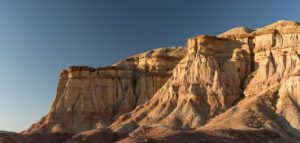
We would check out the rooms after breakfast and drive to Dundgovi province to get White Stupa Mountain. On our way, we will have lunch, which is at a local dining place. Once we arrive in the tourist camp, we check in the tourist camp. Afterwards, we will drive to White Stupa Mountain to walk and hike up. The famous mountain, which is a copper ore in mid Gobi area. The scarp of Tsagaan Suvarga is located in the south west of the Dundgovi province. It is a sheer slope that was an ancient seabed that featured a sedimentary structure that was created over millions of years. It is interesting to see this slope because it faces eastward of the sun. It also appears to be the ruins of an ancient city from far away. (Breakfast – at the hotel, Lunch – local place, Dinner – camp)

Day 3: Vulture valley 170 - 105

This morning, we will have breakfast at the camp. We will head to the famous valley, which is another wonder of the Gobi Desert in Mongolia. It is called Three Beauties of Gobi, a massive rocky mountain. This mountain has steep rock walls and a river flows through between the rock walls. Length of Yol Valley is 10 km. The mountain gorge is named after a bearded vulture which is called Yol in Mongolian. The valley is elevated 2800 meters above sea level and covers an area of 64 square km. Yol Valley forms a gorge that is deep and narrow. The ice field reaches several meters thick by the end of winter and it is several km long. We will stay at a different camp to rest. Meals: (BLD)


Day 4: Singing dunes (Sand Dunes) 180 - 111

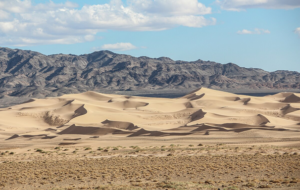
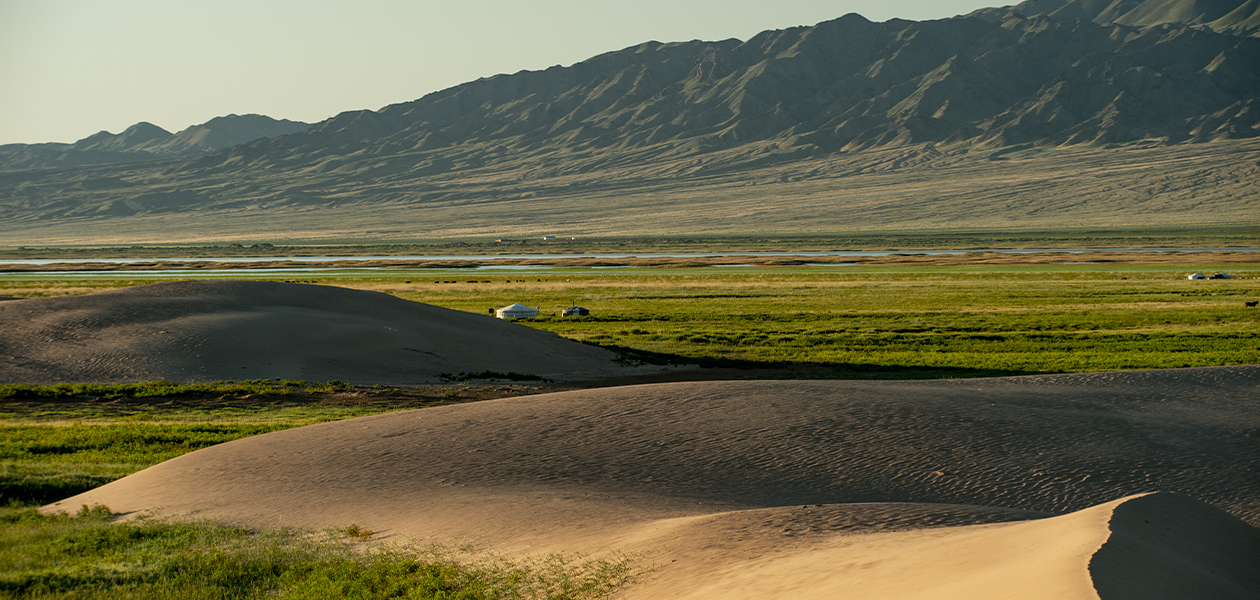
Today we will drive to “Khongor Sand dunes”, which is stretched through 130 km from the north west to the south east and its width varies 3-20km, situated between Sevrey, Zuulun and Bayan Bor high mountain ranges. The highest point of the dunes is 195 m and local people call it Duut Mankhan – Singing dunes. This dune makes a thundering or whistling sound when sands slide down in the wind.

Flat, stable and steep sand dune forms are resulted by the local wind and besides. It is believed that the sand dunes were brought here by the wind from the remnants of ancient sea bottom. There are narrow rivers called Khongor River and Seruun Bulag right in the foot of Khongoryn Els and stream through about 10 kms and create Adag Nuur (lake) right behind the Duut Mankhan. The area around the foot of sand dunes looks more like an oasis, where rain percolates through the loose sand and accumulates on the underlying pediment surfaces. We will stay at a different camp to rest. Meals: (BLD)

Day 5: Bayanzag - Flaming Cliffs 130 - 80

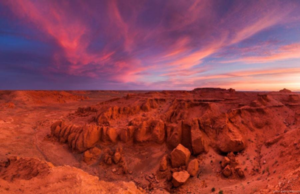
From the sand dunes, we will drive to historical sightseeing near Bulgan town in the South Gobi province. You will likely never forget your visit to the Flaming Cliffs in Mongolia’s Gobi Desert. This stunning setting is the stuff of ad campaigns and holiday card photos, but it’s so much more than a beautiful place. Long before the discovery of the world’s first dinosaur eggs put the Flaming Cliffs on the proverbial map, this dramatic landscape served as a resting place for the camel caravans travelling from Beijing. We will stay at a different camp to rest. Meals: (BLD)

Day 6: Ongi Monastery ruins 150 - 95

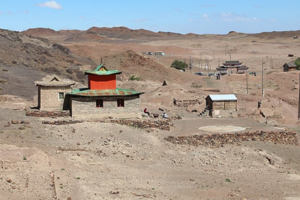
After breakfast at the camp, we will drive to our next destination, which is about 150 km on a dirt road again from the flaming cliffs. One of the biggest monasteries in Mongolia, Ongi, was founded in 1660 and consisted of two temple complexes on the North and South banks of the river Ongi. At its heyday, Ongi monastery consisted of over 30 temples, 4 big Buddhism universities and over 1000 monks at a time. We will stay at a different camp to rest. Meals: (BLD)

Day 7: Kharkhorin - modern town, ancient capital of Great Mongolia 280 - 173

As usual, we will breakfast at the camp and drive 280 km heading to KharKhorin city, the longest drive on our tour. The city is a base of the ancient capital of the Great Empire of Mongolia in the 13th century. We visit Erdene Zuu monastery, one of three monastic centers, to have basic information about Mongolia and its history.  Afterwards, we will visit the KharKhorin museum in the city. We will stay at a different camp to rest. Meals: (BLD)
Full board meals would be served. Tent stay.

Day 8: Hustai National Park - 250 - 155

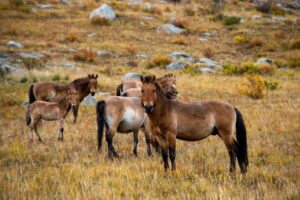
After having breakfast at the camp, we would head to the next destination called Hustai National Park, where people watch wild horses Takhi – Przewalski’s horse. It is 250 km/ 155 miles away from the town on the paved road. We will Lunch and dinner at the national park in the tourist camp. Overnight in the tourist camp too. The National Park is famous for its wild horse sanctuary and different species of wildlife. We would watch documentary films about the NP in the information centre. Meals: BLD

Day 9: Ulaanbaatar 100 - 62

We would check out the camp after breakfast and drive back to the capital. Today is a leisure day for us. Free afternoon and preparation for the Golden Eagle festival for next few days. We will check in a chosen hotel to take a good rest before heading to a different province in the west. Full board meals are included.

Day 10: Ulgii city, Bayan-Ulgii province - domestic flight

In the morning, we will check out from the hotel taking a domestic flight to Ulgii city in Bayan-Ulgii province. Ulgii is a city in western Mongolia that serves as the capital of Bayan-Ulgii province. It’s located at an altitude of 1,710 meters (5,610 feet) and has a population of 28,496 people. The town is predominantly populated by Kazakhs and thus the primary language spoken there is Kazakh.

The city is also known for its vibrant embroidery industry with works heavily inspired by Kazakh music and art; we do not forget its annual Golden Eagle Festival which celebrates the ancient Kazakhstan custom eagle hunting every October. Ulgii is the perfect place to travel to see a different side of Mongolia.

In west Mongolia, the Kazakh buckthorn hunts with horses and eagles. This is an ancestral heritage passed down through generations. According to one Kazakh eagle catcher, all Kazakh children enjoy eagle training and scouting. We will stay at a tourist camp with full board meals.


Day 11-12: Golden Eagle Festival

These 2 days will be spent in the Golden Eagle festival. The festival is organized outside all day long for the sake of the hunting eagles and horses. Golden eagles are born for hunting; they have incredible speed, great eyesight, and powerful feet with sharp talons. The Eagles are hooded by a specially made hood to keep them calm. It is removed when scanning areas of the steppes. The Eagles can spot even the slightest twitch from a great distance. Eagles are a very important part of the environment. By eating dead animal matter, they help with nature’s clean-up process. Eagles are also hunters, so they keep animal populations strong. They do this by killing weak, old, and slower animals, leaving only the healthiest to survive.

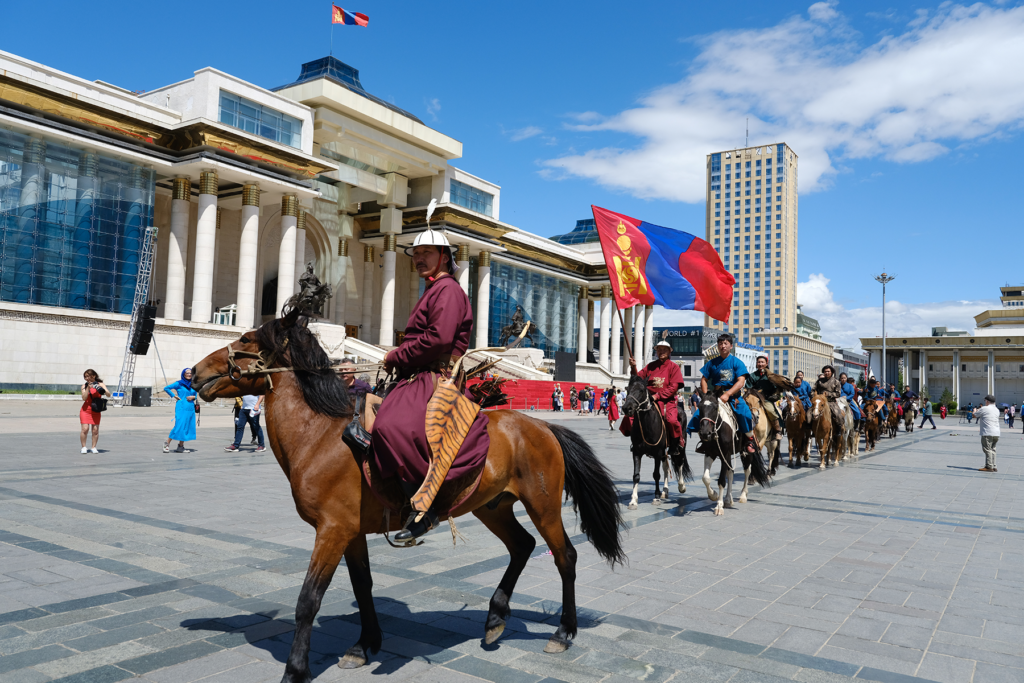
This fascinating festival is held by the local Kazakh minority to bring and promote their heritage to their next generation and to the world. Local Kazakhs show their eagle hunting culture and their unique traditions. It starts with the opening parade with well-dressed hunters and is about authentic competitions of eagle training skills and hunting with golden eagles. Specially trained eagles catch small stuffed animals such as foxes and hares. In addition, some uncommon cultural events and small competitions are organized including, traditional coin grabbing game while riding on horseback, Uriankhai archery competition. After enjoying the festival we will take a rest at the camp.

Day 13: Ulaanbaatar city flight

We will head back to the capital taking the same flight early in the morning. When we reach the capital it is lunch time, which is followed by the city tour. It includes a visit to the Buddhist Monastery of Gandan Tegchenling, which is one of the three biggest monastic centres in Mongolia. Afterwards we would visit one of the famous cashmere factories making the tour inside. In the evening, we would watch a cultural performance of ethnic group ensemble at a small sized theatre. Afterwards, we would have farewell dinner at a restaurant to try traditional food. Overnight at a selected hotel. (Breakfast – tourist camp, Lunch, Dinner – restaurants).

Day 14: Departure 50 - 31

The tour guide and bus driver would pick you up and transfer you to the airport. Hope you all have a very nice and memorable trip in Mongolia with the help of us and see you again. It is a great pleasure to assist you to travel here adding a new page to your life. Have a safe and joyful trip back to your home.

Map
Best Seller
From$100
Booking Form
Enquiry Form
Full Name*
Email Address*
Your Enquiry*
* I agree with Terms of Service and Privacy Statement.
Please agree to all the terms and conditions before proceeding to the next step
February 1, 2030
* Please select all required fields to proceed to the next step.

Proceed Booking

Save To Wish List

Adding item to wishlist requires an account

1661
5 travellers are considering this tour right now!